
Referee Guide
Match Official Signals
30 referee and touch-judge signals — what each gesture means and when it is used.
Scoring
3 signals
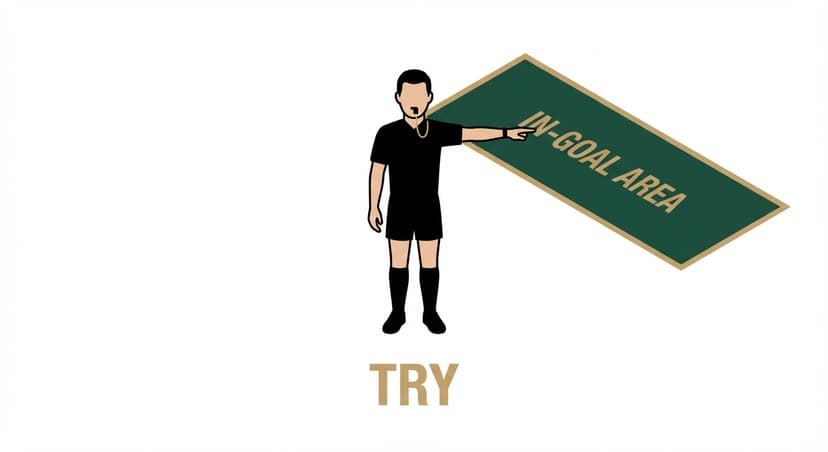
Try
Referee points to the centre of the goal area with one arm extended, then blows the whistle.
When used: Awarded when a player grounds the ball in the opponents' in-goal area.
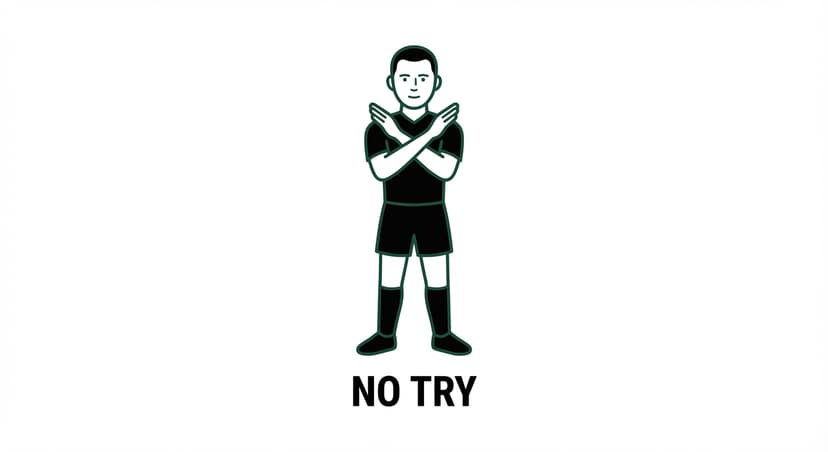
No Try
Referee waves both arms across the body in an X shape, then shakes the head.
When used: Signals that a try has been disallowed, e.g. due to a knock-on or foot in touch.
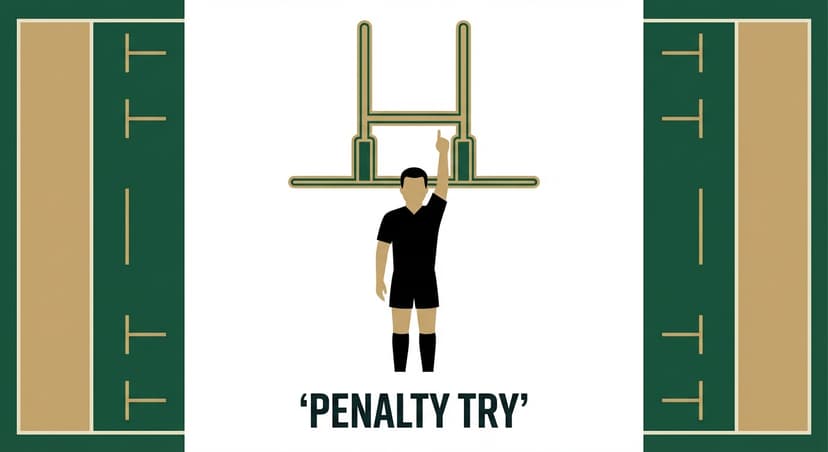
Penalty Try
Referee points to the centre of the goal posts and announces "Penalty Try".
When used: Awarded when the referee is satisfied a try would have been scored but for foul play by the defending team.
Kick-off & Restarts
2 signals
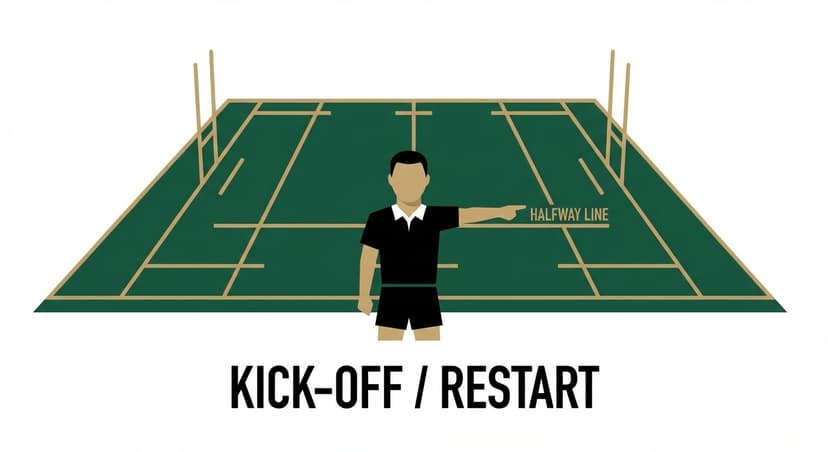
Kick-off / Restart
Referee extends one arm horizontally in the direction of play, pointing toward the halfway line.
When used: Indicates the start of the match or restart after a score. Used to indicate which team kicks off.
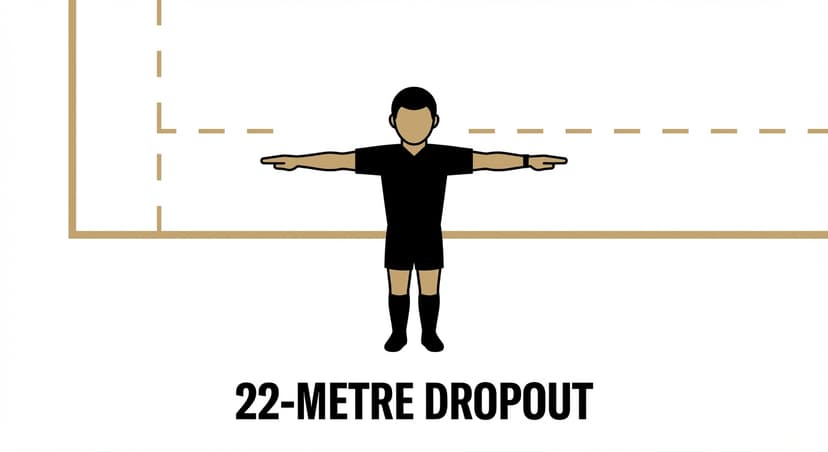
22-Metre Dropout
Referee extends both arms horizontally at shoulder height, palms facing down, pointing toward the 22-metre line.
When used: Awarded to the defending team when the ball is made dead in their in-goal, or grounded there by an attacker.
Penalties & Advantage
3 signals
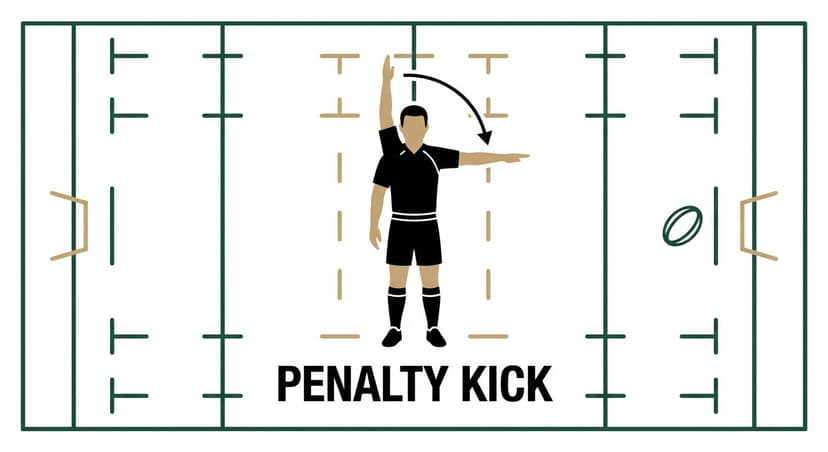
Penalty Kick
Referee raises one arm above the head and points it horizontally in the direction of attack, indicating the non-offending team's direction.
When used: Awarded for a deliberate or serious infringement of the laws.
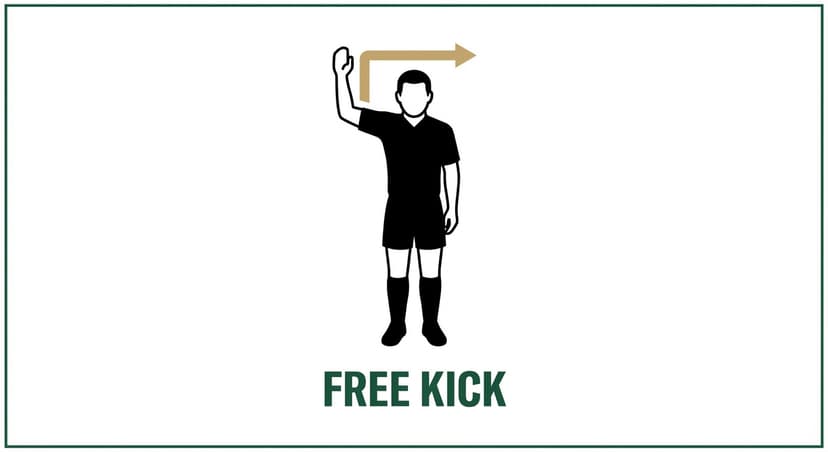
Free Kick
Referee raises one arm and bends the elbow so the forearm forms an "L" shape, pointing in the direction of attack.
When used: Awarded for a lesser infringement (e.g. incorrect scrum engagement, lineout fault). Cannot score directly with a drop goal.
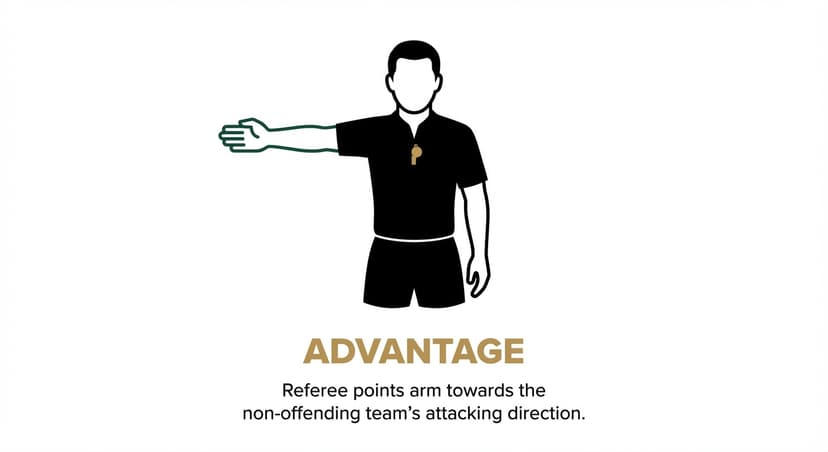
Advantage
Referee extends one arm horizontally at waist height, pointing in the direction of attack for the non-offending team.
When used: Signals the referee is playing advantage following an infringement. Held until advantage is gained or the referee calls "No advantage".
Scrums
4 signals
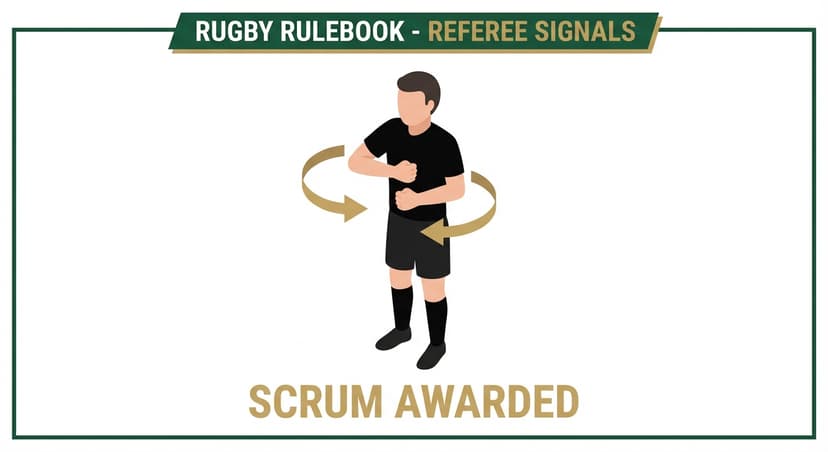
Scrum Awarded
Referee rotates both fists in circles in front of the body, then points in the direction of attack for the team awarded the scrum.
When used: Indicates a scrum has been awarded. Also used to call for a scrum reset.
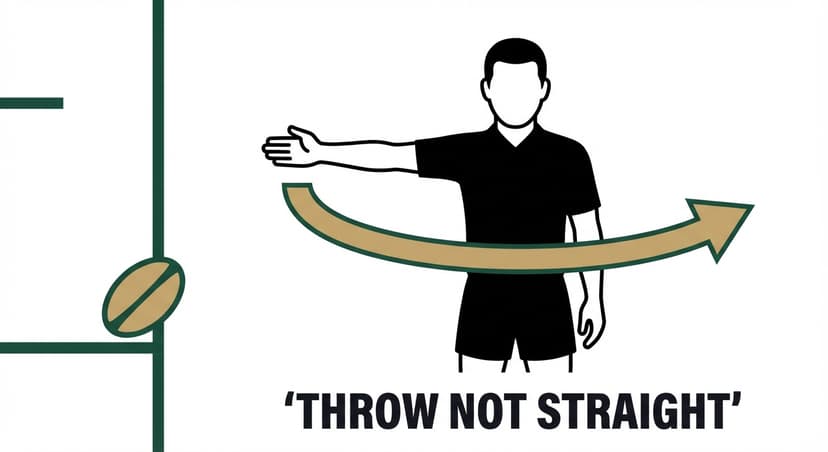
Throw Not Straight (Scrum)
Referee extends one arm forward, then moves it across the body in a horizontal arc to the side.
When used: Awarded when the ball is not thrown straight into the scrum tunnel. Free kick to the non-offending team.
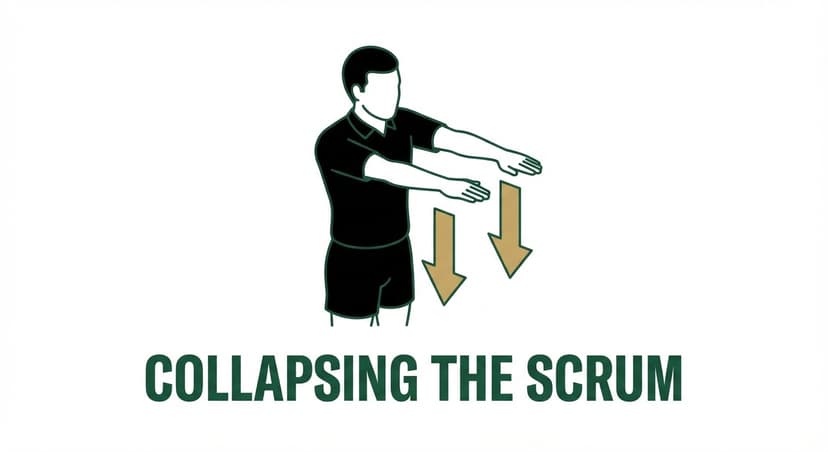
Collapsing the Scrum
Referee extends both arms forward, palms facing down, then lowers them toward the ground.
When used: Awarded when a player deliberately collapses the scrum. Penalty to the non-offending team.
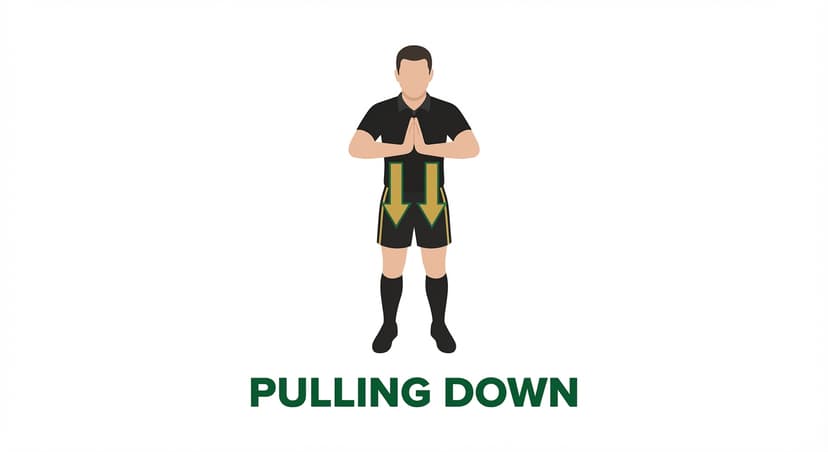
Pulling Down a Player
Referee places both palms together and pushes them downward.
When used: Indicates a player is illegally pulling an opponent down in the scrum or in open play.
Lineout
3 signals
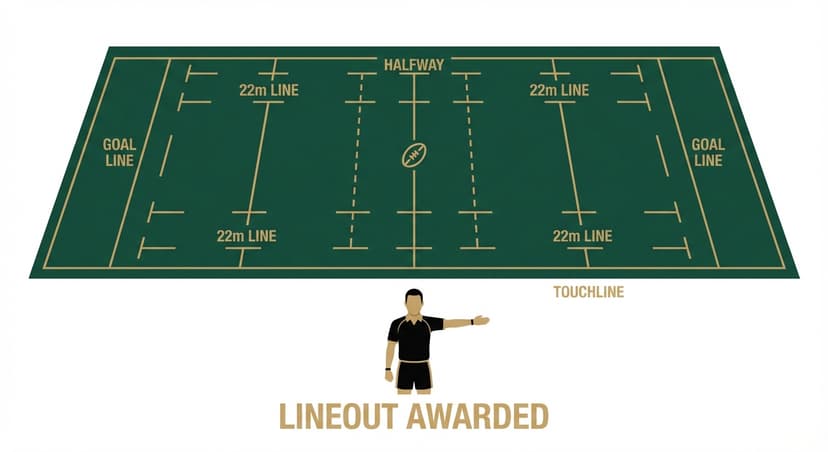
Lineout Awarded
Referee extends one arm perpendicular to the touchline, at shoulder height, pointing in the direction of attack for the team throwing in.
When used: Indicates a lineout has been awarded and which team throws in.
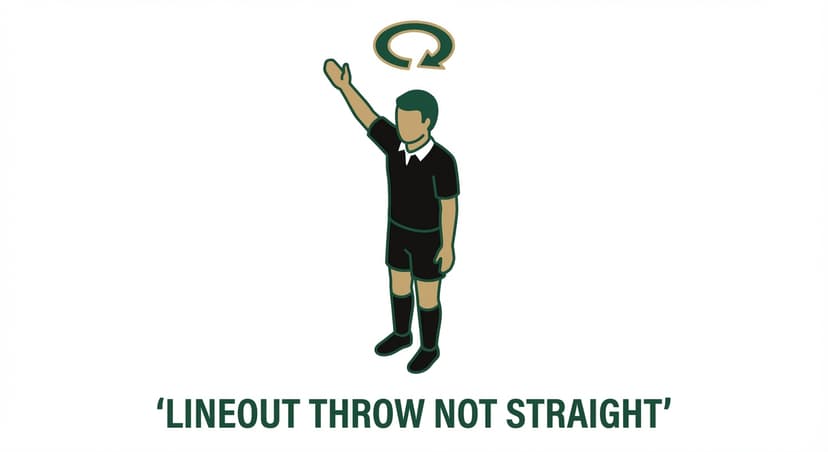
Lineout Throw Not Straight
Referee extends one arm above the head and tilts it to one side, indicating the ball went off-line.
When used: Awarded when the ball is not thrown straight down the middle of the lineout tunnel.
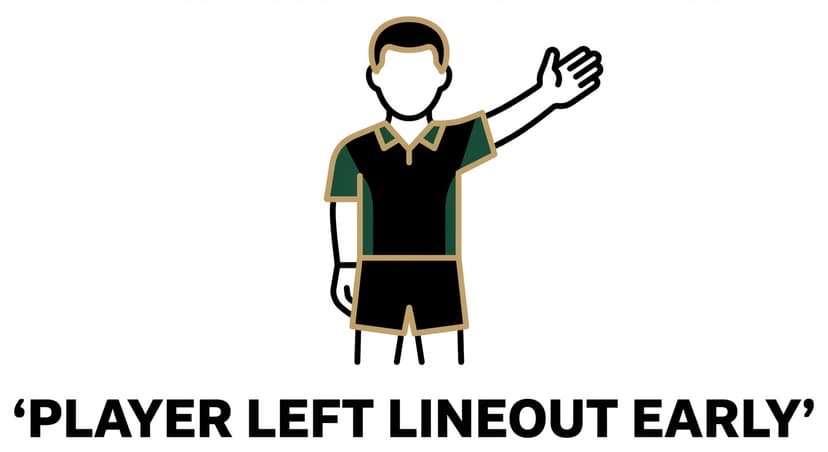
Player Left the Lineout Early
Referee raises one hand with fingers extended and moves it to indicate a player stepped out of the lineout before the ball was thrown in.
When used: Awarded when a lineout player moves before the ball is thrown.
Tackles, Rucks & Mauls
4 signals
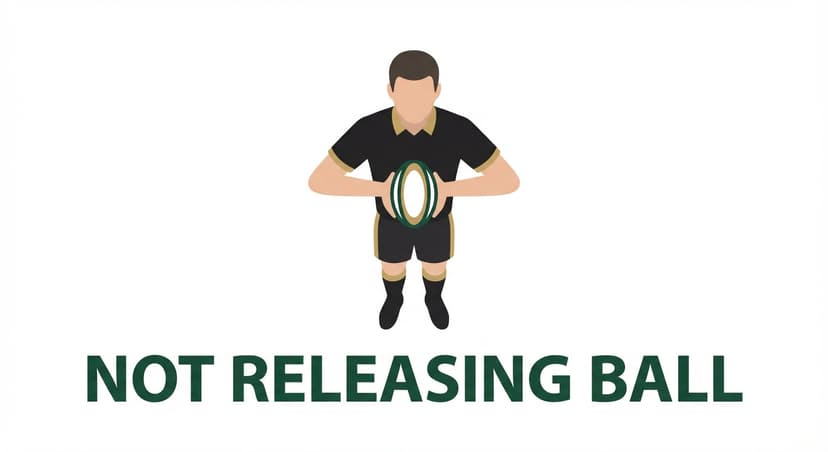
Not Releasing Ball After Tackle
Referee holds both hands out with the ball between them, simulating a player holding the ball on the ground.
When used: Awarded when a tackled player fails to release the ball immediately.
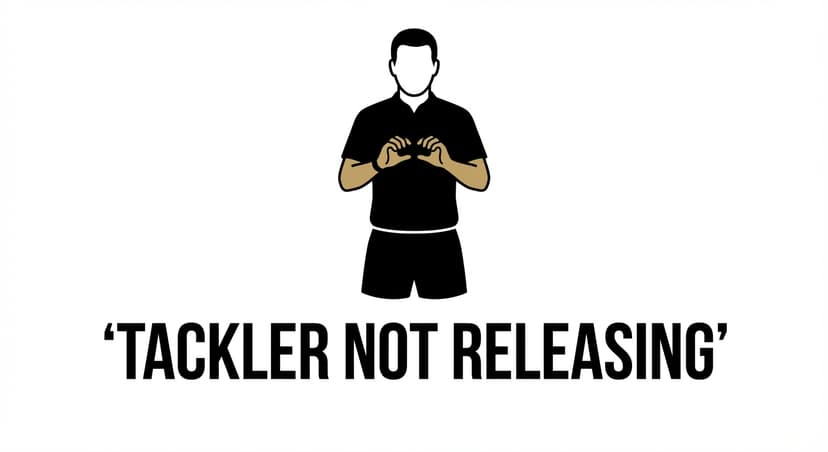
Tackler Not Releasing
Referee makes a grasping motion with both hands, holding them together at chest height.
When used: Awarded when the tackler does not immediately release the tackled player.
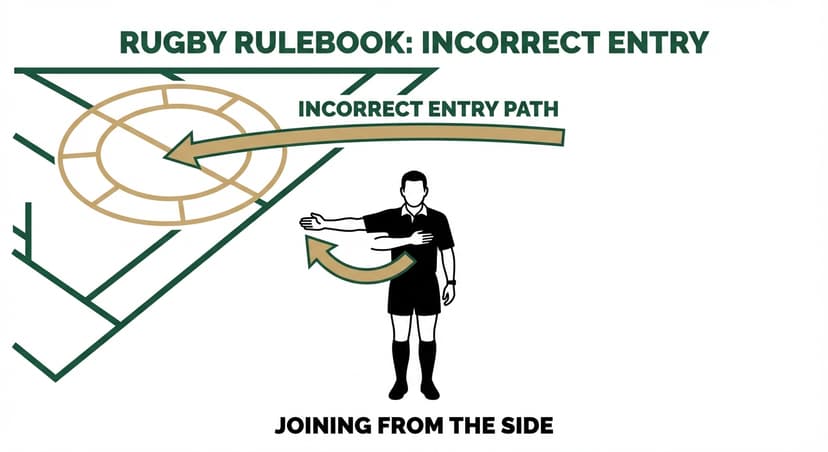
Joining Ruck from Side
Referee makes a sweeping gesture with one arm from the side toward the ruck, indicating incorrect entry.
When used: Awarded when a player joins a ruck or maul from the side rather than from behind the hindmost foot.
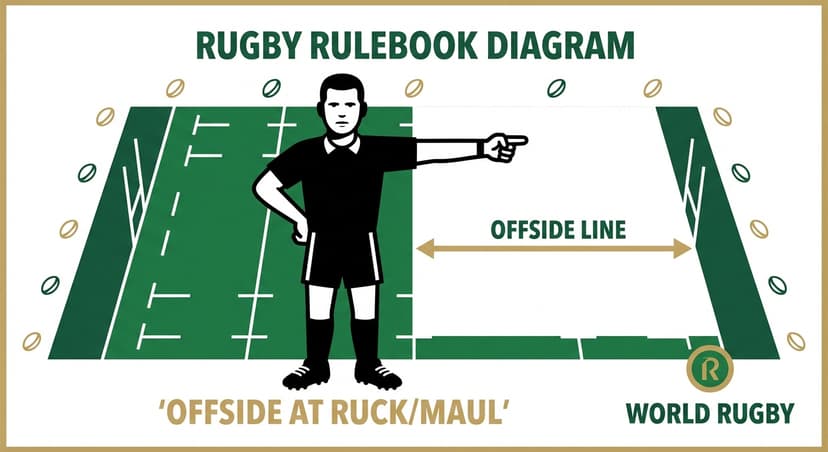
Offside at Ruck or Maul
Referee places one hand on the hip and extends the other arm to indicate the offside line at the ruck or maul.
When used: Awarded when a player is in front of the hindmost foot of their side at a ruck or maul.
Offside
2 signals
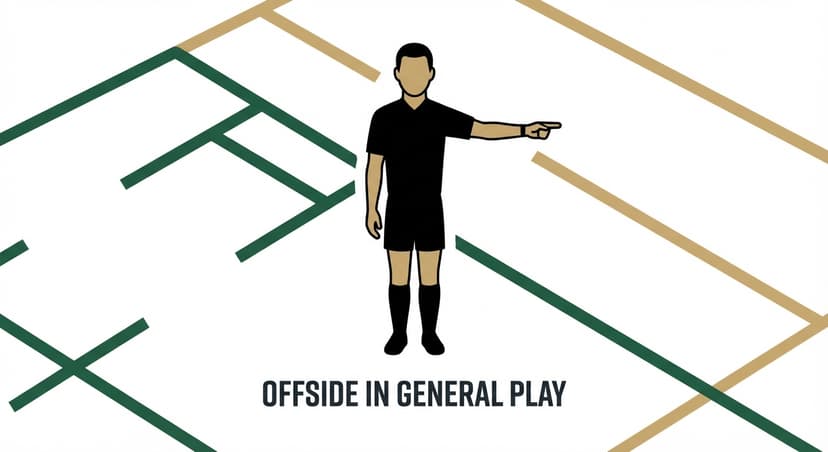
Offside in General Play
Referee extends one arm horizontally to the side, perpendicular to the direction of play, to indicate an offside player.
When used: Awarded when a player is in an offside position in open play.
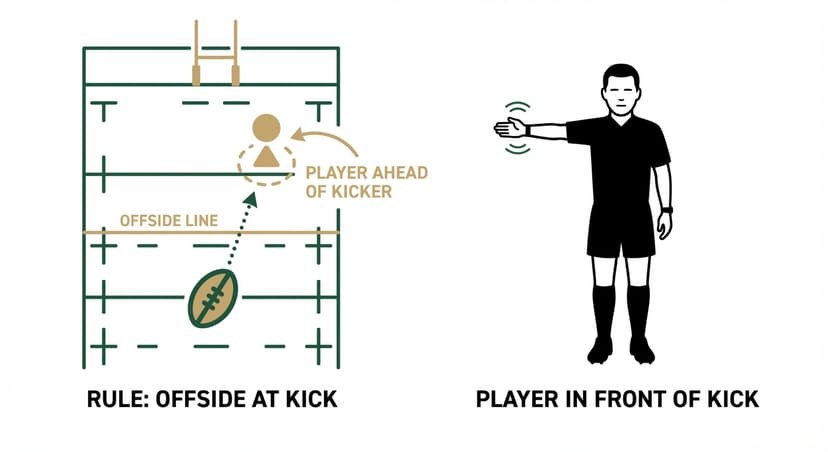
Player in Front of Kick
Referee extends one arm forward and waves the hand, pointing in the direction the ball was kicked.
When used: Awarded when a player who is in front of a kicker in their own team interferes with play before being put onside.
Knock-on & Forward Pass
1 signal
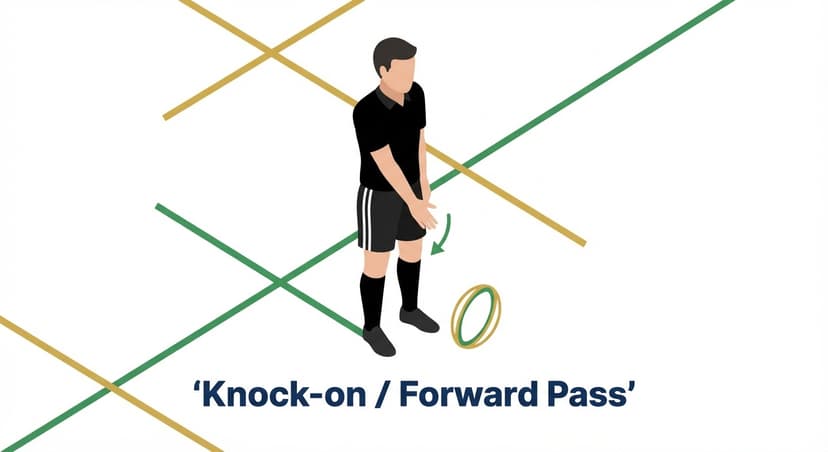
Knock-on or Throw Forward
Referee taps the knee with one hand, indicating the ball has gone forward.
When used: Awarded for a knock-on (ball hits hands or arms and goes forward) or a forward pass.
Foul Play
4 signals
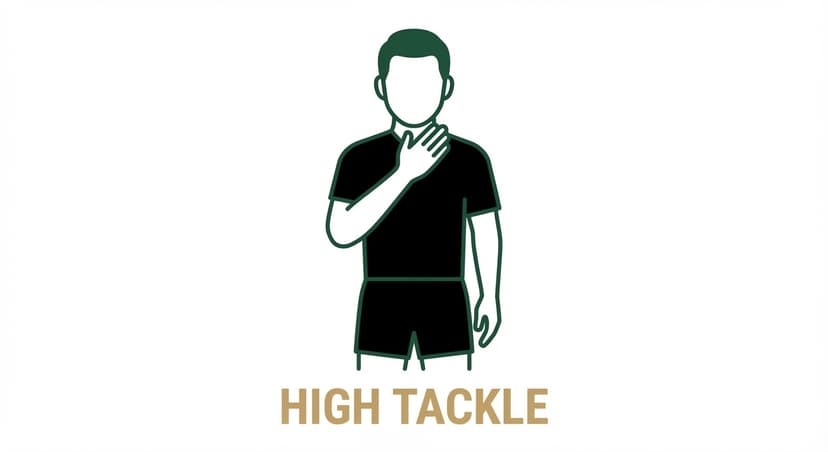
High Tackle
Referee places one hand flat against the side of the neck, then points to indicate the non-offending team's direction.
When used: Awarded when a tackler makes contact with the head or neck of an opponent. May warrant a yellow or red card.
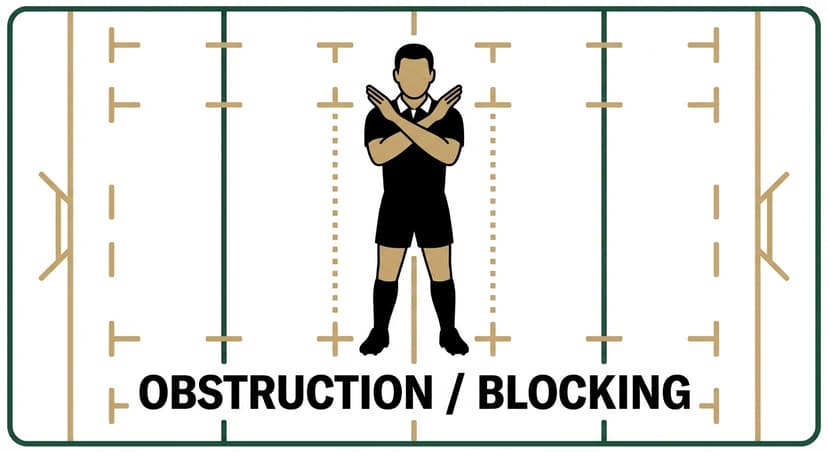
Obstruction / Blocking
Referee crosses both forearms in front of the chest in an X shape.
When used: Awarded when a player runs in front of a ball carrier to obstruct defenders, or otherwise illegally blocks opponents.
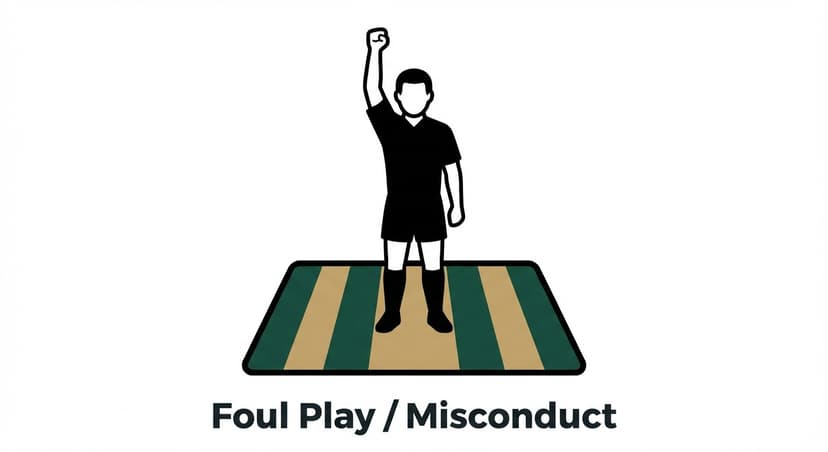
Foul Play / Misconduct
Referee raises a clenched fist above the head, then points to the non-offending team's direction.
When used: Indicates deliberate foul play, dangerous play, or misconduct. May be accompanied by a yellow or red card.
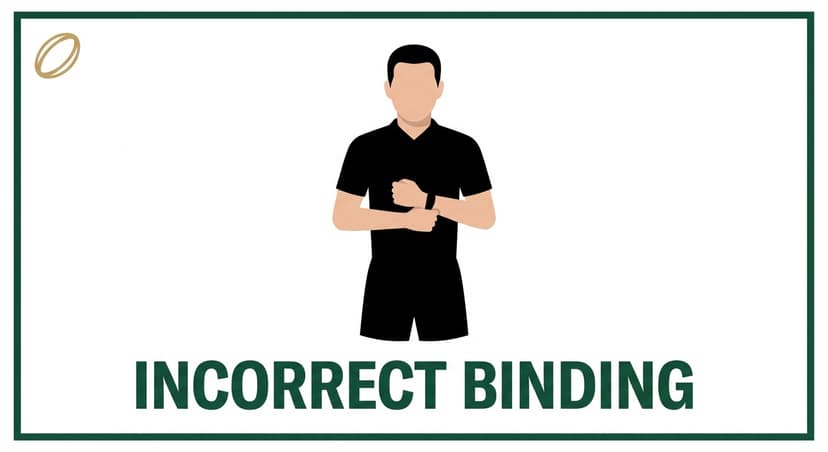
Incorrect Binding
Referee wraps one hand around the wrist of the other arm to mime incorrect binding at the scrum or maul.
When used: Awarded when a player does not bind correctly with the full arm around the body of a team-mate or opponent.
Cards
2 signals
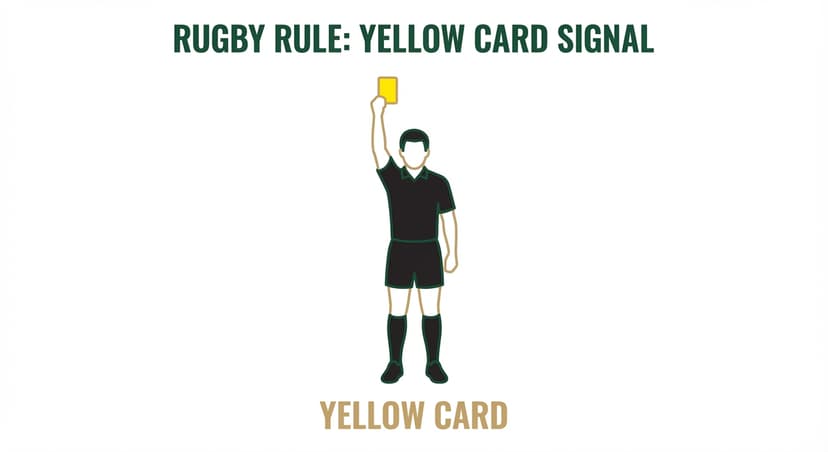
Yellow Card
Referee holds up a yellow card above the head. The player is directed to the sin bin area.
When used: Issued for deliberate or persistent infringement, dangerous play, or misconduct. Player is suspended for ten minutes.
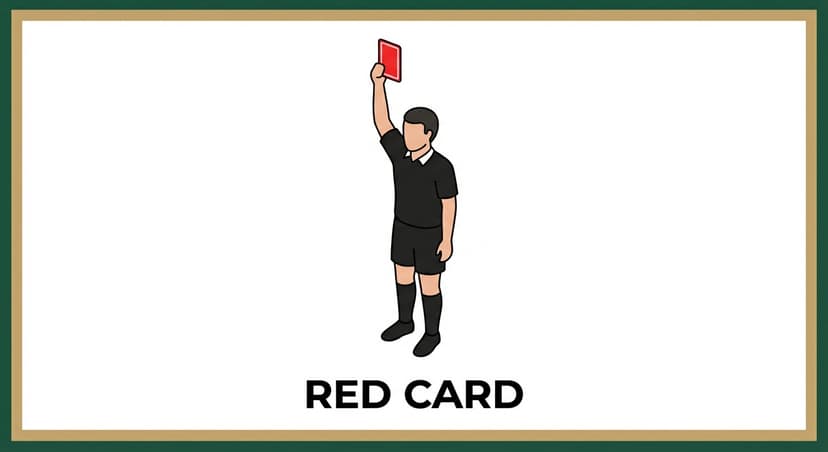
Red Card
Referee holds up a red card above the head. The player must leave the field immediately.
When used: Issued for serious foul play, dangerous play, or misconduct. Player cannot be replaced and the team plays with fewer players.
Mark & Touch
2 signals
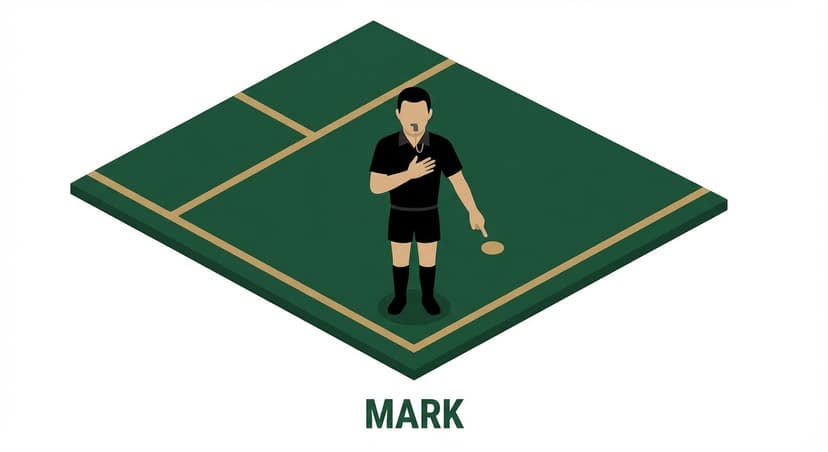
Mark
Referee places one hand flat on the chest, then indicates the position of the mark.
When used: Awarded when a player catches the ball directly from a kick within their own 22 and calls "Mark". The player is awarded a free kick at that position.
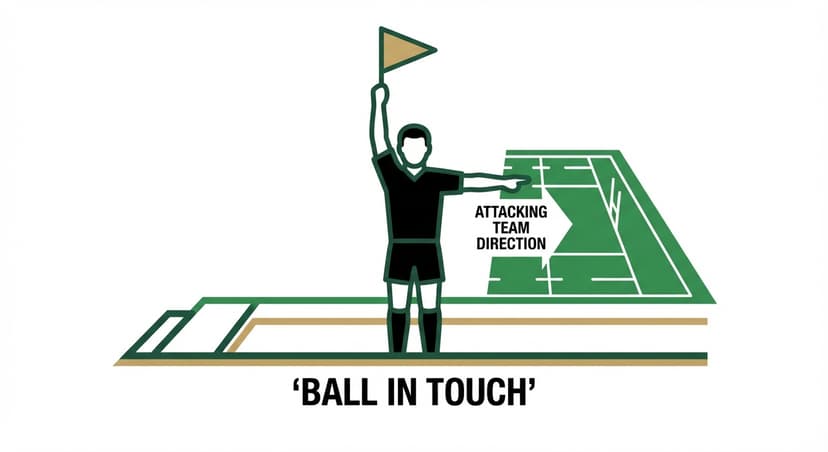
Ball or Player in Touch
Touch judge raises the flag above the head to indicate touch, then points in the direction of attack for the non-offending team.
When used: Indicates the ball or a ball-carrying player has gone into touch. A lineout is awarded to the opposing team.