
Cheat Sheet
Quick Reference
7 at-a-glance cards for the most common rugby situations. Expand any card for a step-by-step guide.
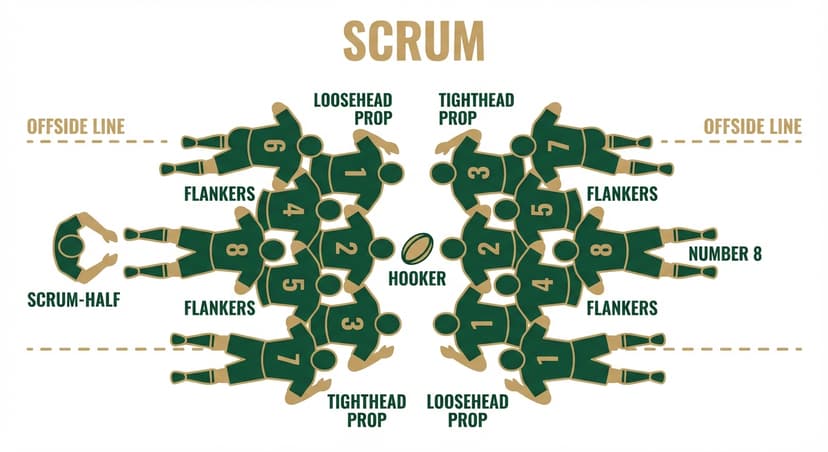
Scrum
A scrum is a way of restarting play after a knock-on, forward pass, or other minor infringement. 8 players from each team bind together and contest for the ball.
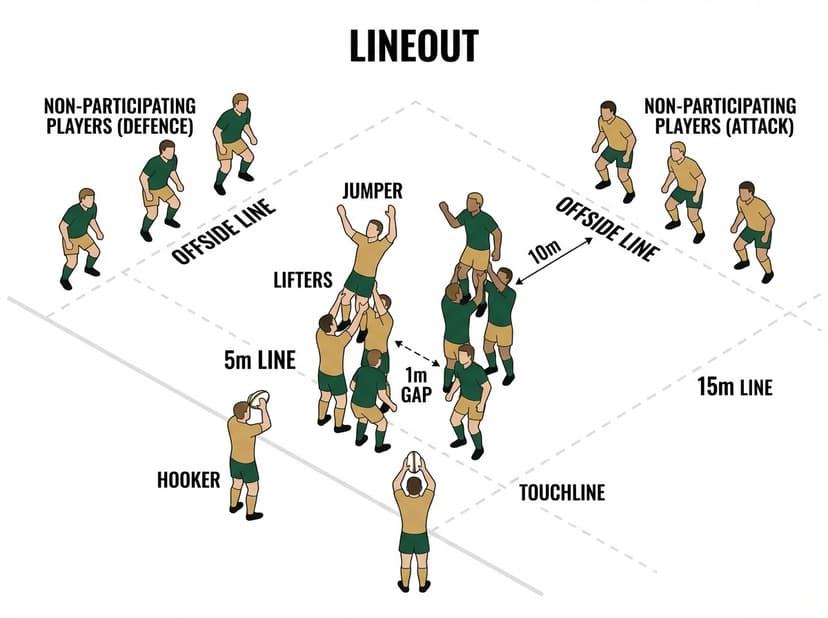
Lineout
A lineout restarts play after the ball goes into touch. Players line up perpendicular to the touchline, and the ball is thrown in between them.
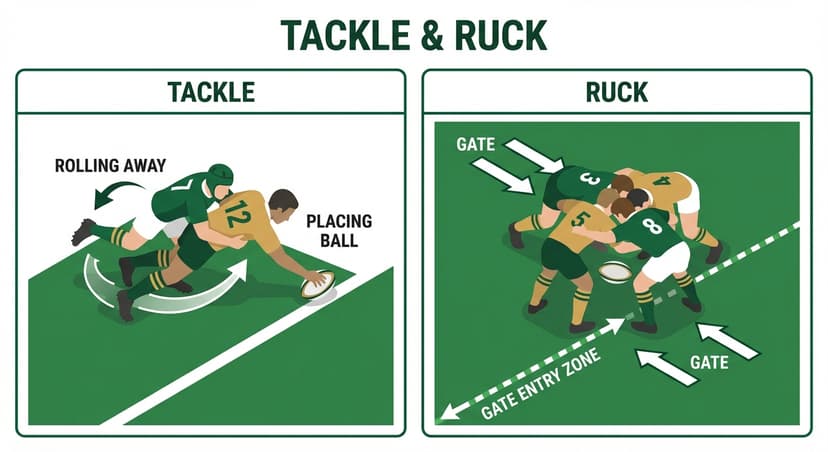
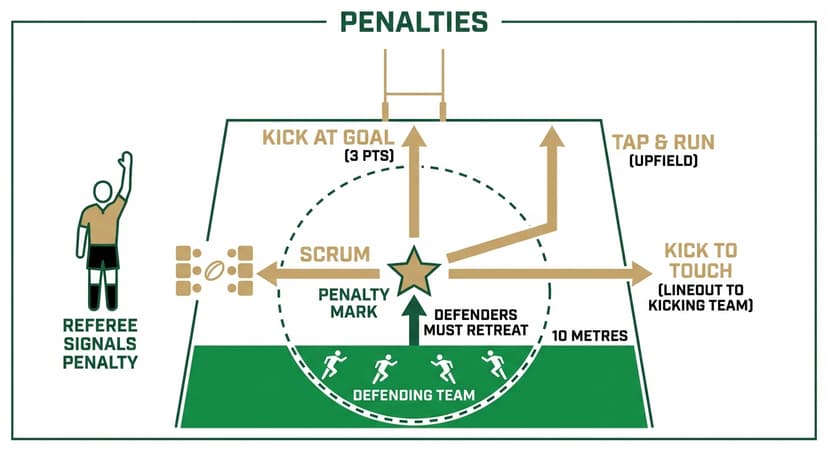
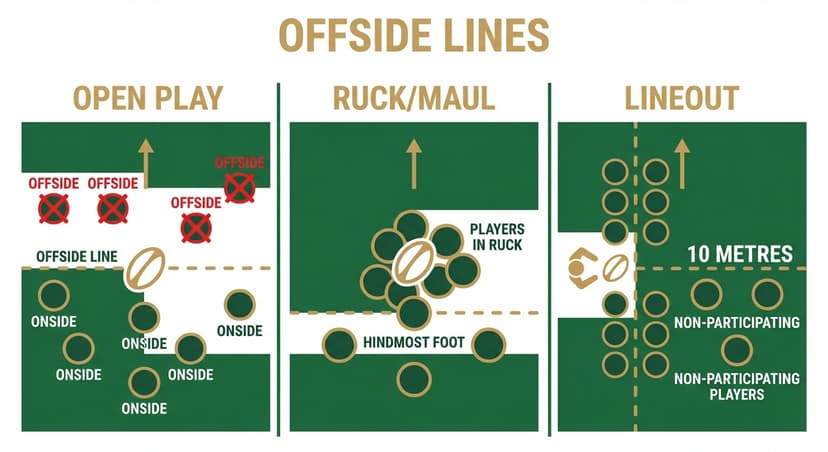
Penalties
A penalty is awarded for serious infringements. The non-offending team has several options. Common penalties include offside, collapsing the scrum or maul, and illegal tackles.
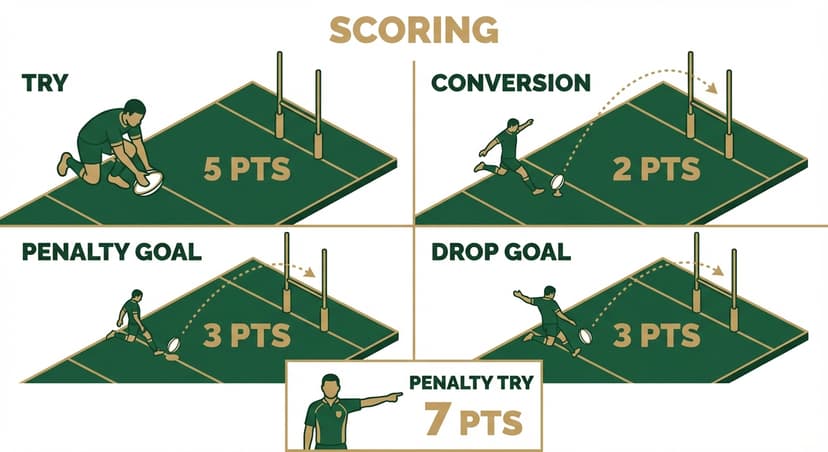
Scoring
Points can be scored in four ways: a try, a conversion, a penalty goal, or a drop goal. A penalty try is a special case awarded for denying a certain try.
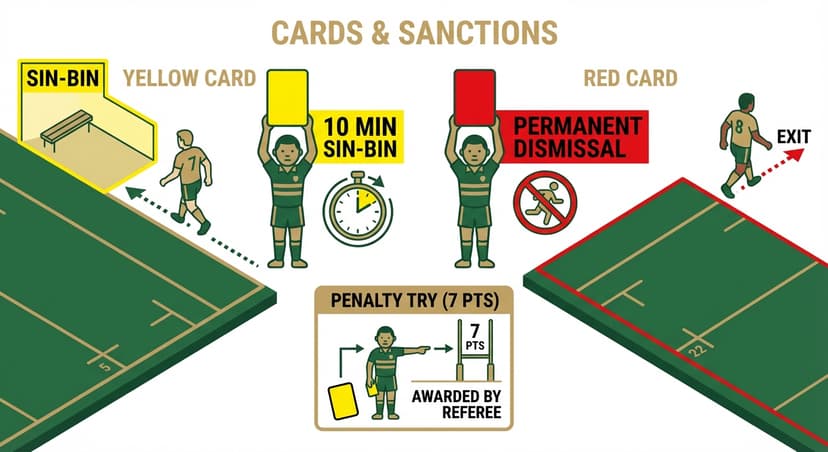
Cards & Sanctions
Referees can issue yellow or red cards for dangerous play, foul play, or misconduct. Yellow cards send a player to the sin bin; red cards end their participation entirely.