
Team
Covers team size, replacements, uncontested scrums, and player welfare processes.
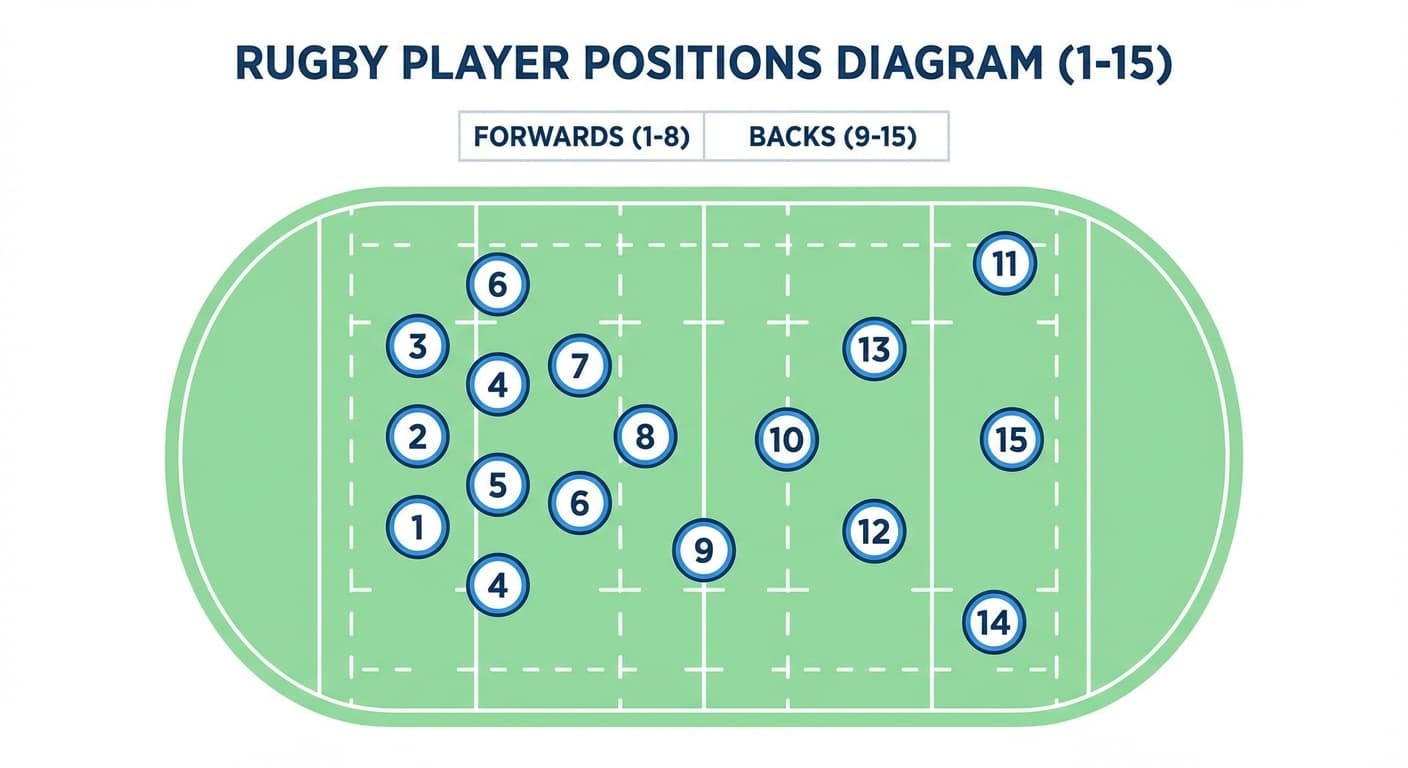
Each team has a maximum of 15 players on the field at any one time. Teams can nominate up to 8 replacements (substitutes). Players can only be replaced when the ball is dead and with the referee's permission.
The most important aspect of this law involves player safety — especially around the front row (props and hooker) who participate in scrums. Teams must have enough trained front-row players available at all times. If they don't, the scrums become "uncontested" — meaning neither side can push and the team throwing in automatically wins the ball — which changes the dynamic of the game significantly.
There are also strict rules protecting players who are concussed or seriously injured: a concussed player must be immediately and permanently removed ("Recognise and Remove"). Players with blood injuries or head injuries requiring assessment (HIA) can be temporarily replaced while they are treated.
Real-World Examples
Scenario
During a match, the hooker (a front-row player) is sent off for foul play. The team now only has one qualified front-row replacement on the bench.
Outcome
The referee must enquire at the next scrum whether the team can continue with contested scrums. If the team cannot field a suitably trained front row, the referee orders uncontested scrums played with eight players per side. A player in another position must leave the field to bring numbers to eight.
Scenario
A player takes a hard knock to the head and appears dazed. The team doctor believes a Head Injury Assessment is needed.
Outcome
In an HIA-approved match, the player must immediately leave the field and is temporarily replaced. The game cannot restart until the replacement is on the field. The player has 12 minutes (actual time) to be assessed. If cleared, they may return; if not, the replacement becomes permanent.
Scenario
A winger is replaced tactically at half-time. Twenty minutes into the second half, the replacement winger is injured.
Outcome
The tactically replaced winger cannot return to replace an ordinary injury (Law 3.10 only allows return for specific reasons like front-row injuries, blood/head injury, or foul-play injury). Another replacement from the bench must be used instead.
Scenario
A team finishes the first half with 16 players on the field due to an administrative error.
Outcome
The opposing captain can object to the referee. The referee will order the captain of the offending team to reduce the number appropriately. The score at the time of the objection remains unchanged. Sanction: Penalty.